Main Role:
Game Director
Writer
Narrative Designer
Team Distribution:
1 Game Director
1 Game Designer
5 Programmers
1 Art Director
1 Artist
1 Audio Designer
1 Composer
1 Producer
Project Duration:
3 weeks
~35 hours/week
+~50 hours solo polishing
(approx. 155 hours in total)
Tools Used:
Unity 6
Twine
Procreate
Canva
Excel
Play The Colony Stands for All
Overview

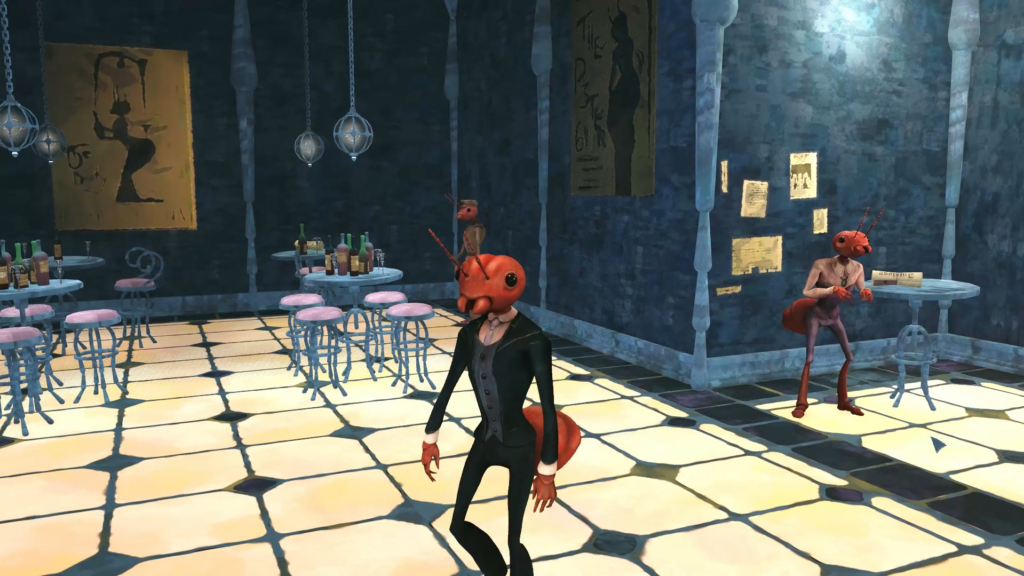
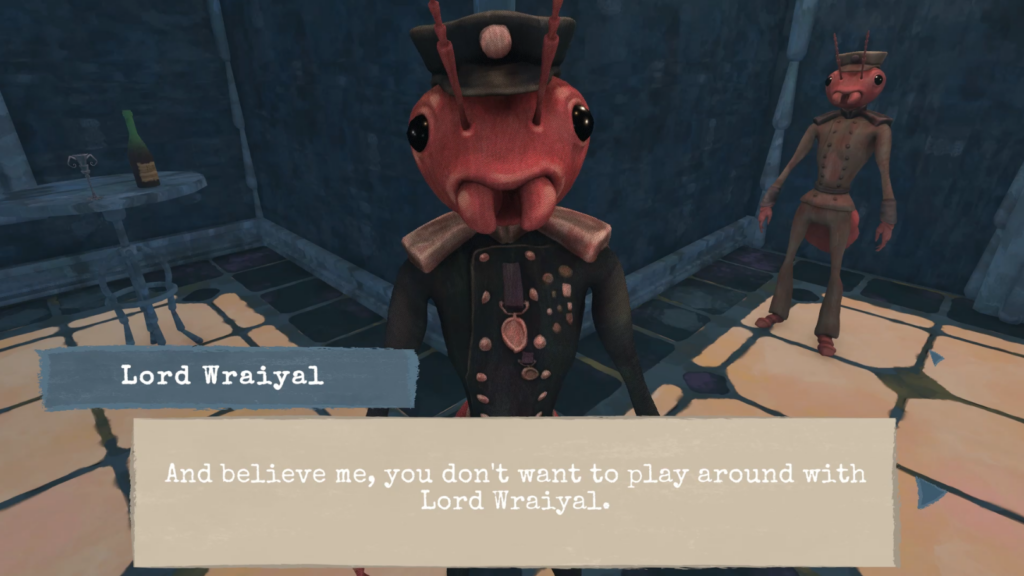
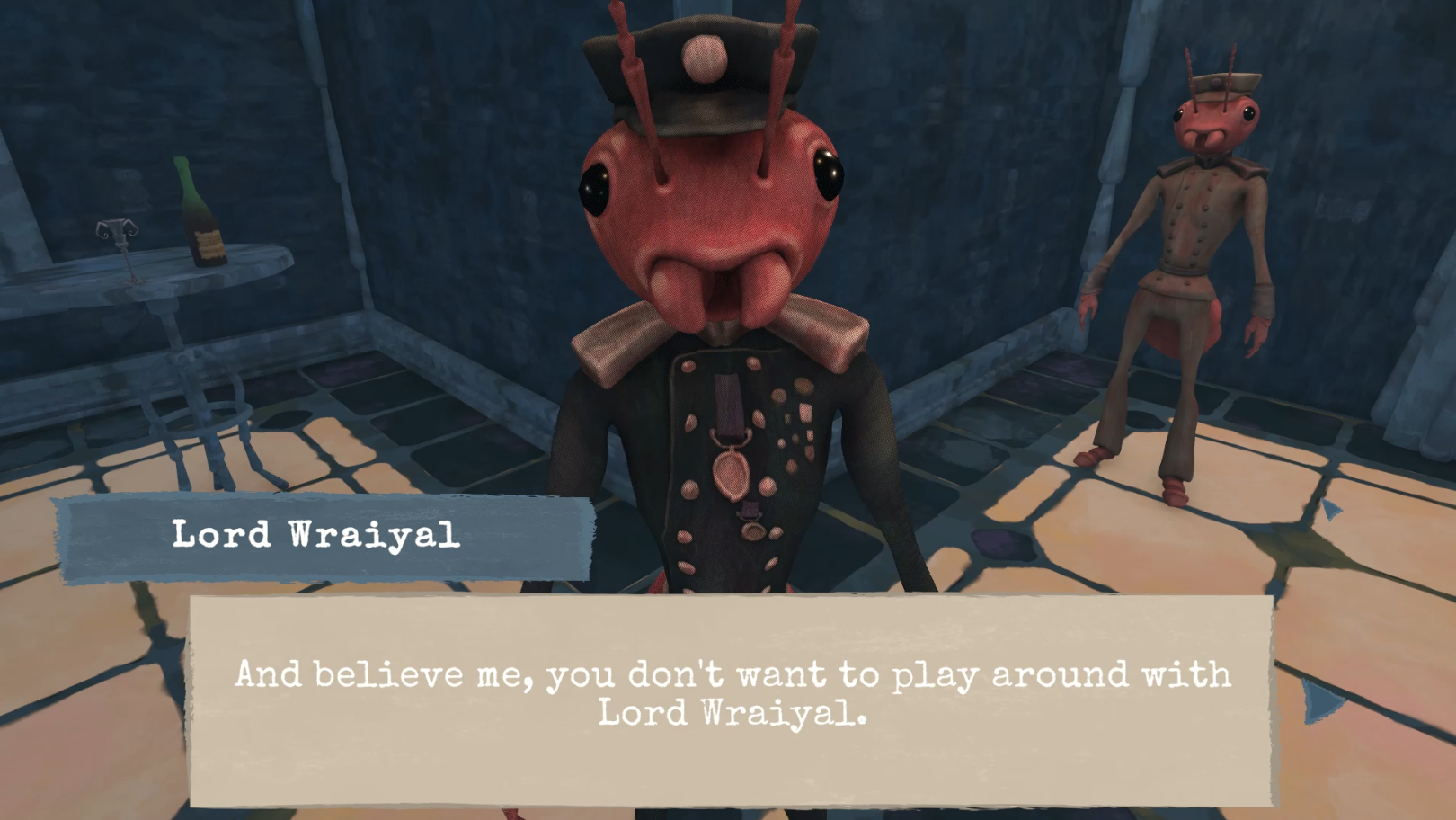
The Colony Stands for All is a dialogue-based investigative narrative game set in a royal palace of anthropomorphic ants. The player uncovers the truth by speaking with characters, gathering evidence and making choices that affect both relationships and the final outcome.
The story explores the topics of hierarchy and control through an ant colony monarchy, where roles are defined by nature. This setting allowed me to portray and explore what happens when the existing order no longer serves the collective.
The game was developed in 3 weeks as a vertical slice. It features:
- 10 unique characters
- 5 different endings
- More than 600 dialogue nodes
This was my most ambitious attempt at writing, designing and directing a branching narrative within a tight timeframe.
Starting out with the story
I began by defining roles inspired by classic detective story tropes, such as the culprit, victim, red herring, etc. From there, I set up the relationships between characters and made it into a narrative structure.
I developed the plot from the ending backwards. I defined the final scene first, since I knew I wanted the player to have a choice to either support or expose the Queen. I built the rest of the mystery around this outcome.
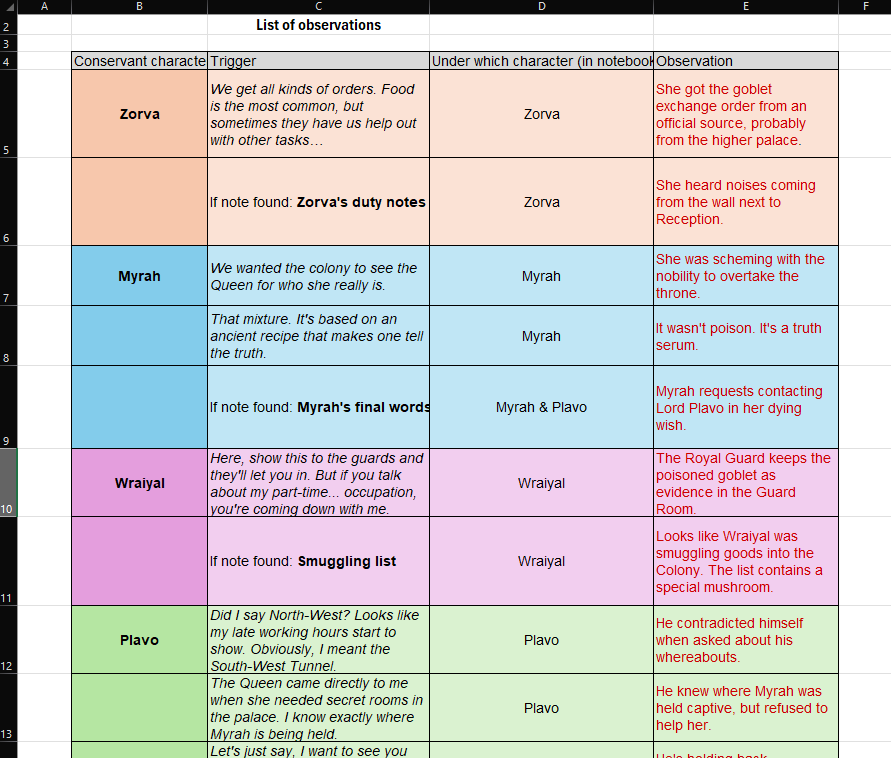
I worked closely with the lead programmer and helped implementation by creating condition charts and flow diagrams. They showed the relationship between dialogues, evidence, and the quest system, making sure the narrative logic was clearly understood by everyone on the team.
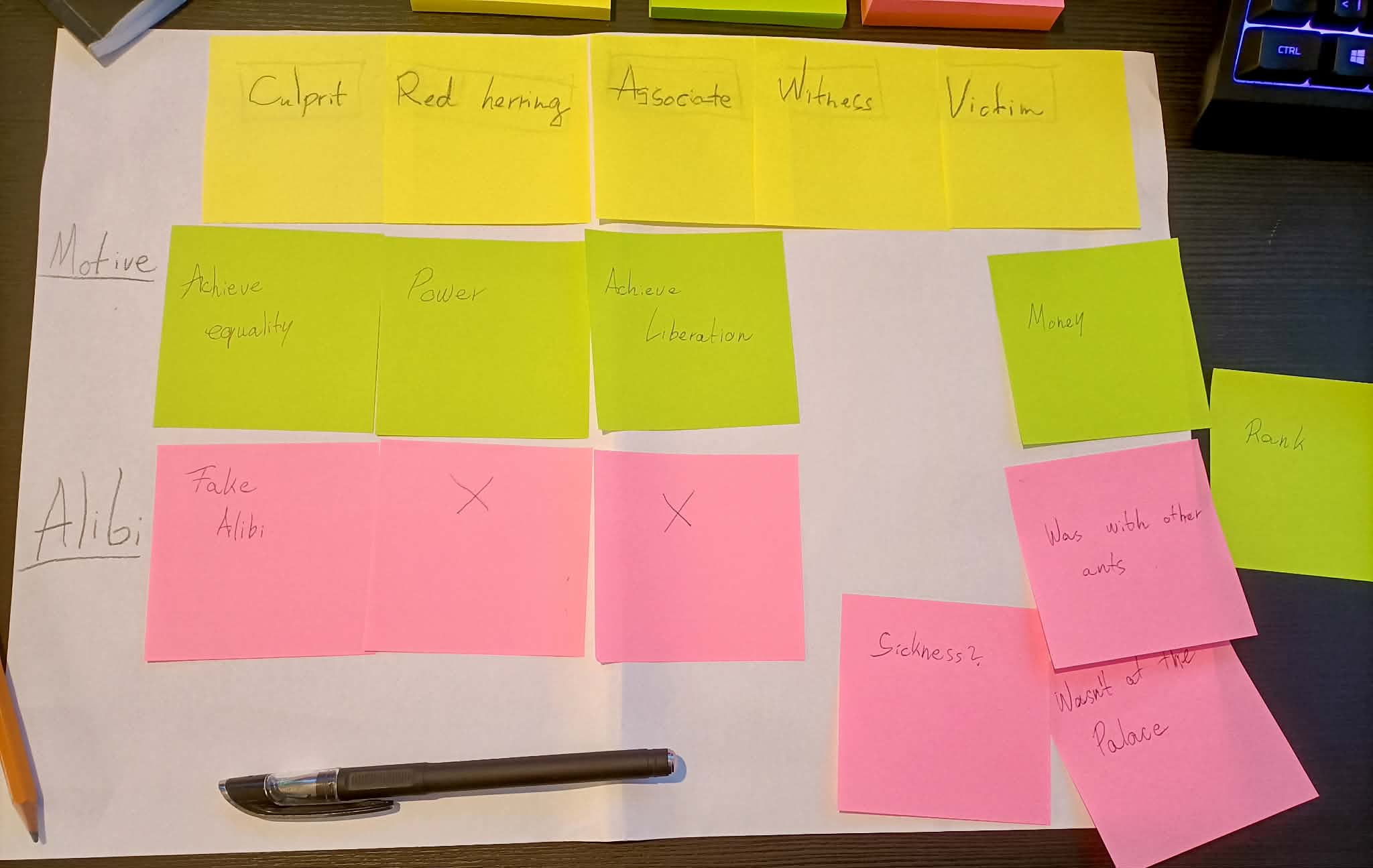
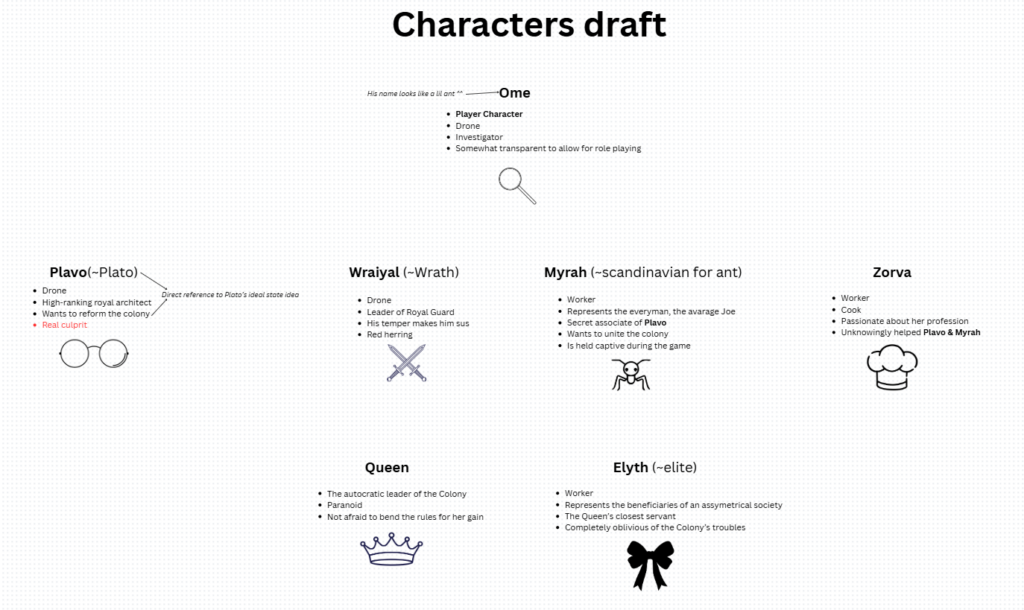
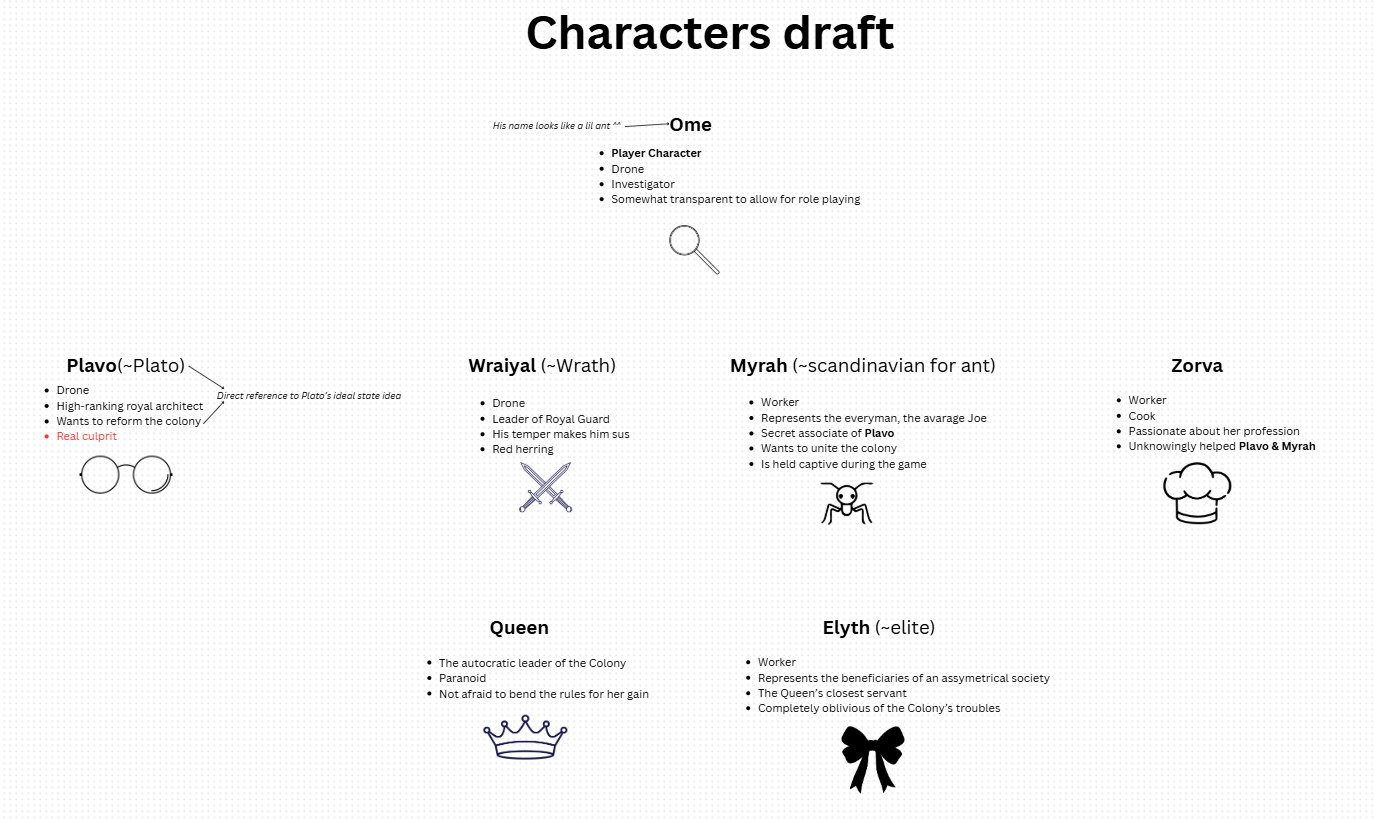
Character concept brainstorming during pre-production.
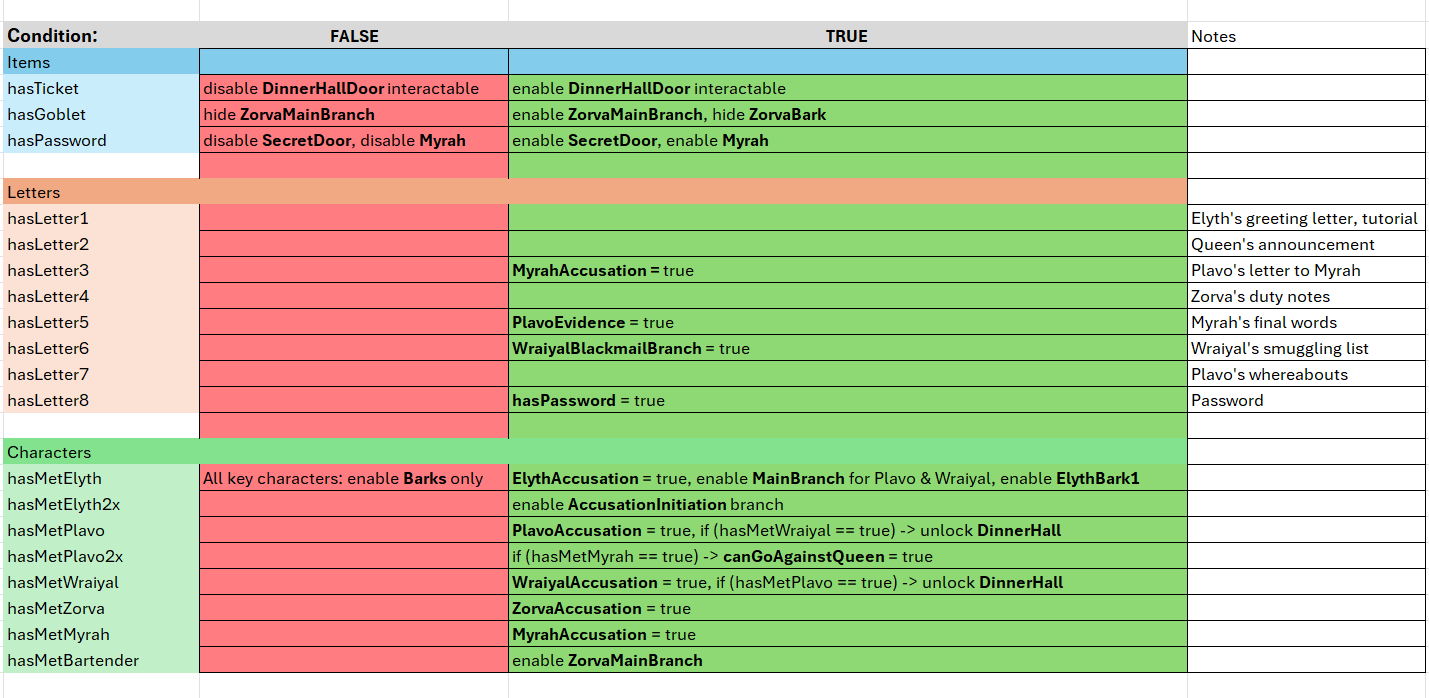
Condition chart showing interconnected variables.
Dialogue system design
Because of the short production time, I needed a system that was fast to write and easy to reuse. Each character was built around two main dialogue branches and two longer interaction rounds.
The key rule was that every player choice had to work with multiple possible responses. This meant writing lines that remained valid even when the conversation branched in different directions. It was challenging at first, but it made the process much faster and helped keep the dialogue focused on the core plot.
This approach also created the illusion of deeper player choice, without requiring fully unique branches for every scenario.
For fast iteration I used Twine to prototype and test conversation flows quickly.
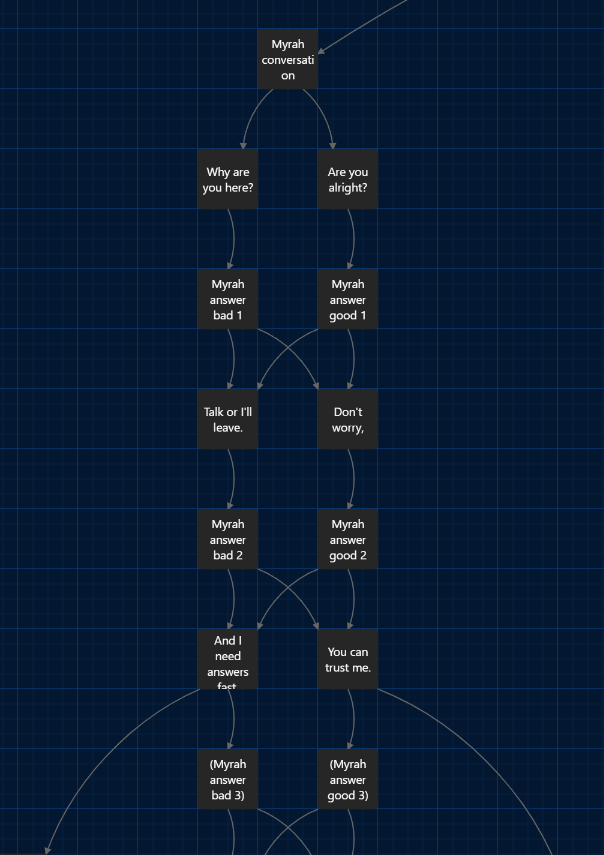
Dialogue implemented in Twine for testing and iteration.
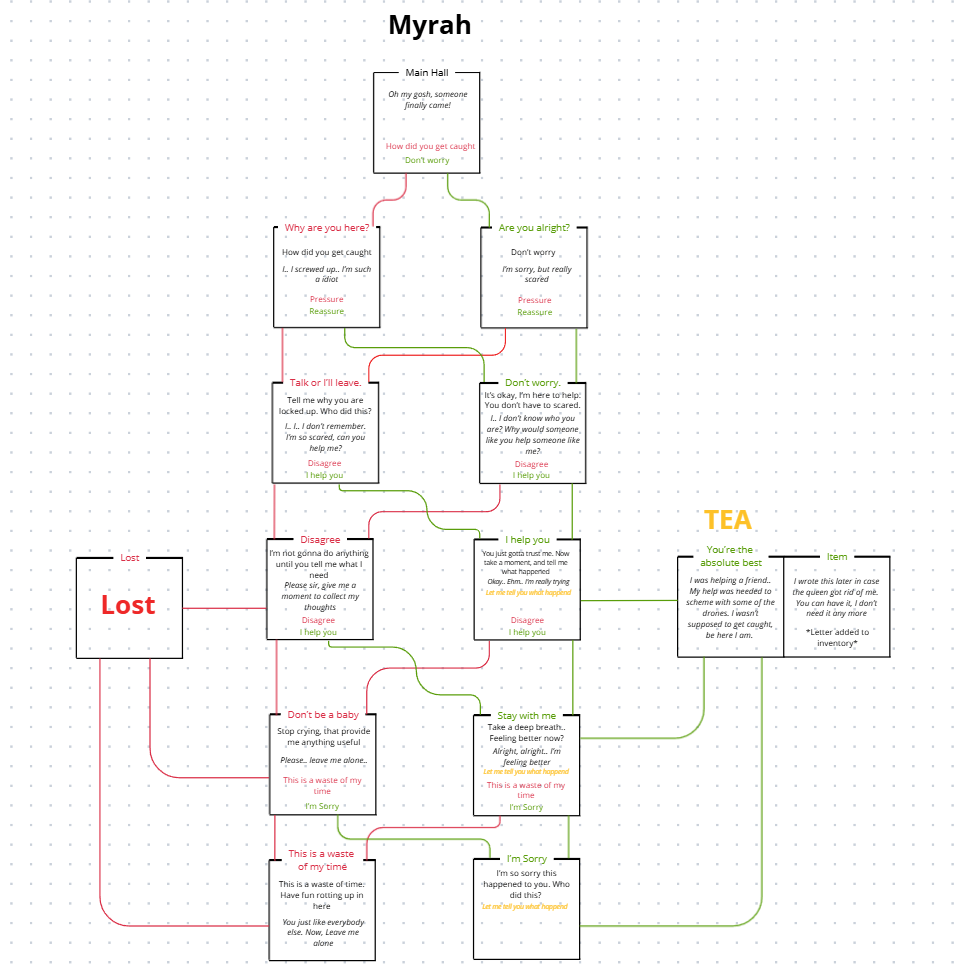
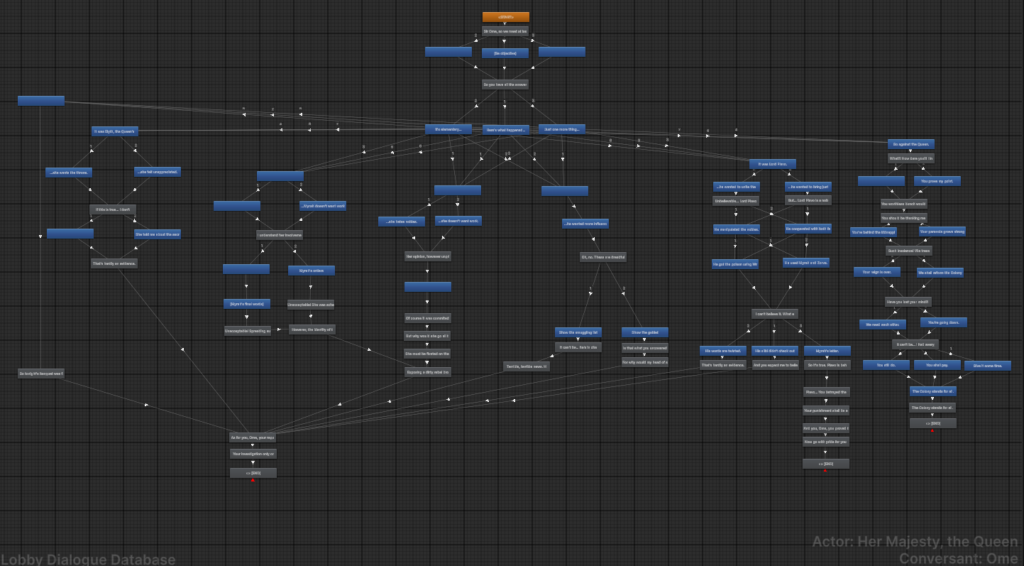
We made mock-ups for all conversations to design the dialogue progression and possible outcomes.
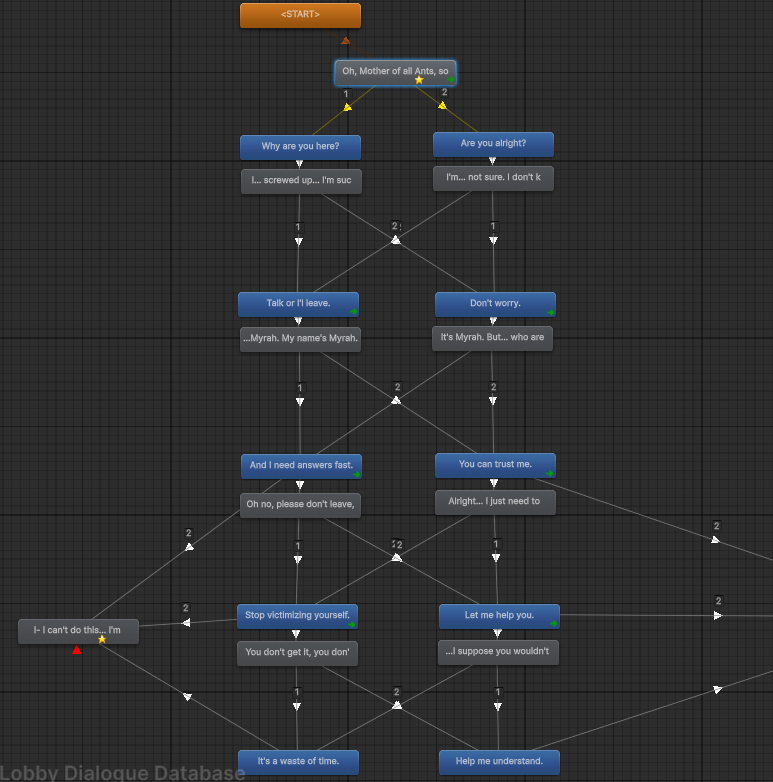
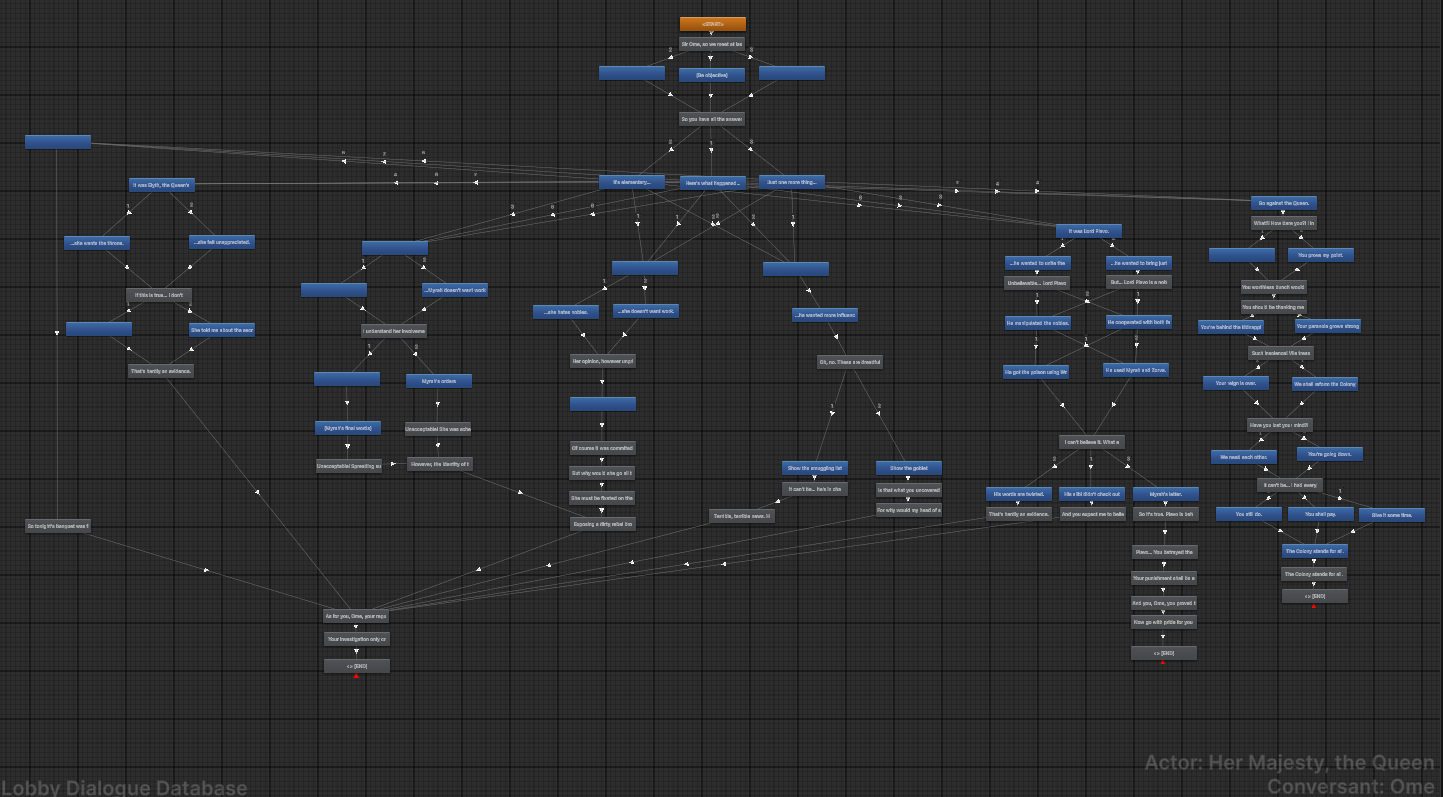
Example of a cross-branching dialogue implemented in Unity.
Investigation as Gameplay
The early part of each key conversation is designed as an investigation phase. The player learns about the character and chooses how to approach them, for example through empathy, honesty, or intimidation, without these approaches being explicitly communicated.
To support this, I created a hidden scoring system:
- Player starts at 3 out of 5 points
- Each response adds or removes a point
- At 5 points, the character opens up
- At 1 point, the character refuses to share further details.
We referred to these interactions as “social boss fights,” inspired by Deus Ex: Human Revolution’s developer commentary.
During playtesting, I found that showing this system in the UI made conversations feel like a guessing game, so I chose to hide it and let players rely on intuition instead.
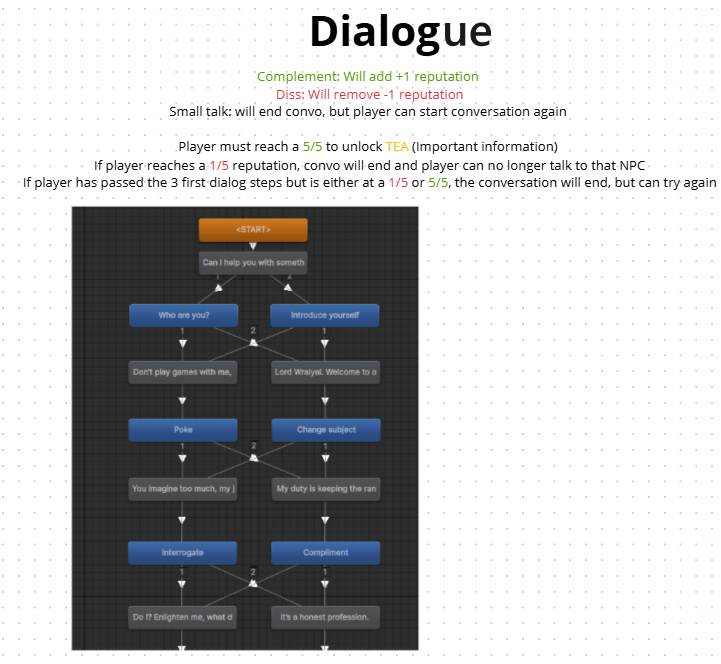
‘Social boss fight’ figure used for explaining the system to the team.
Level and Flow Design
I initially designed progression to be controlled through space. Doors would open and close as the story advanced, preventing players from accessing information they were not meant to discover yet.
However, playtests revealed several issues:
- Spaces were too large and didn’t have enough meaningful content,
- Players had trouble finding clues,
- Navigation became confusing, especially with fixed cameras.
To solve this, I reduced the size of the environment. Rather than blocking players with doors, certain dialogue options are hidden until enough evidence is collected. If the player lacks the required information, they are encouraged to explore further. This change required more dialogue and design work, but it made the detective gameplay significantly deeper and improved pacing a lot.
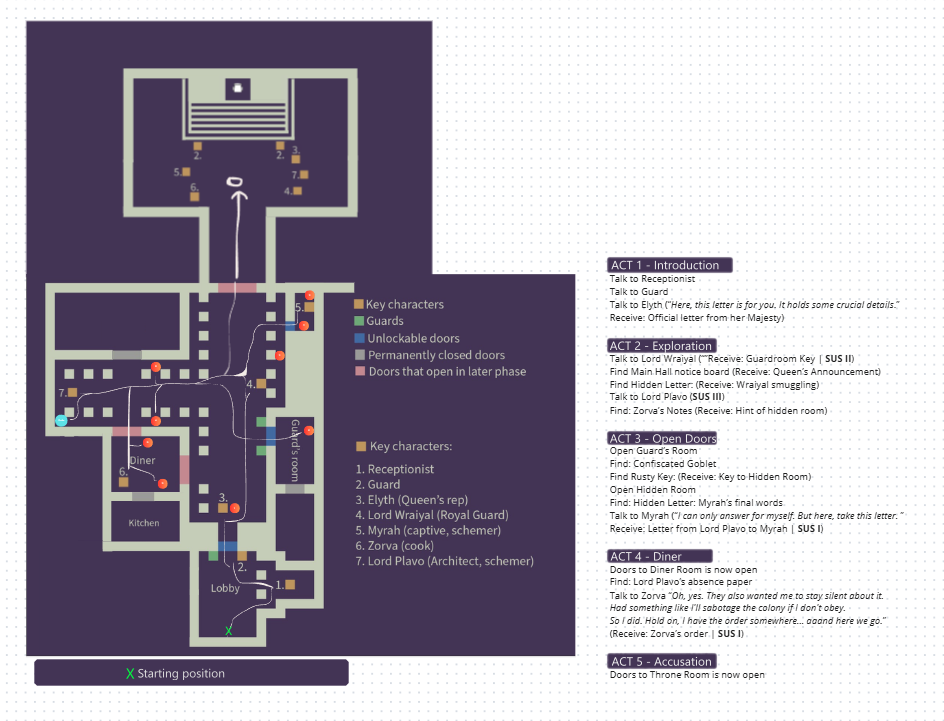
Initial level design illustration.
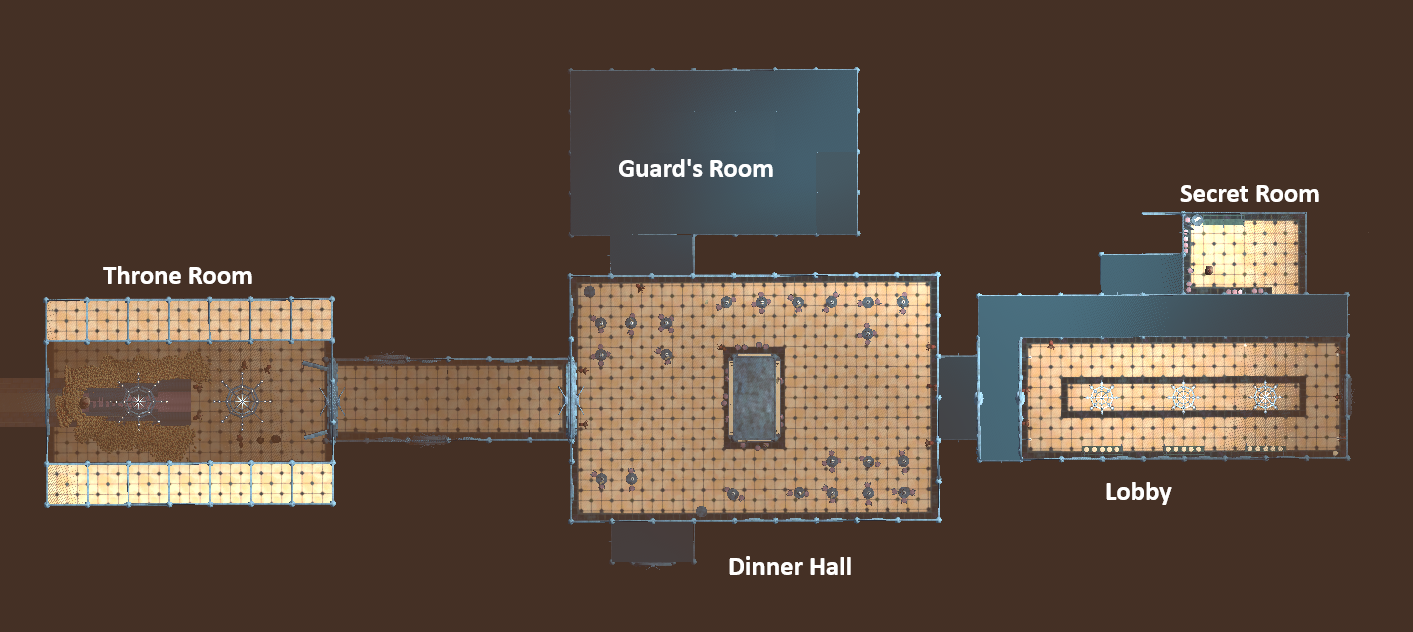
Reworked level from top-down view.
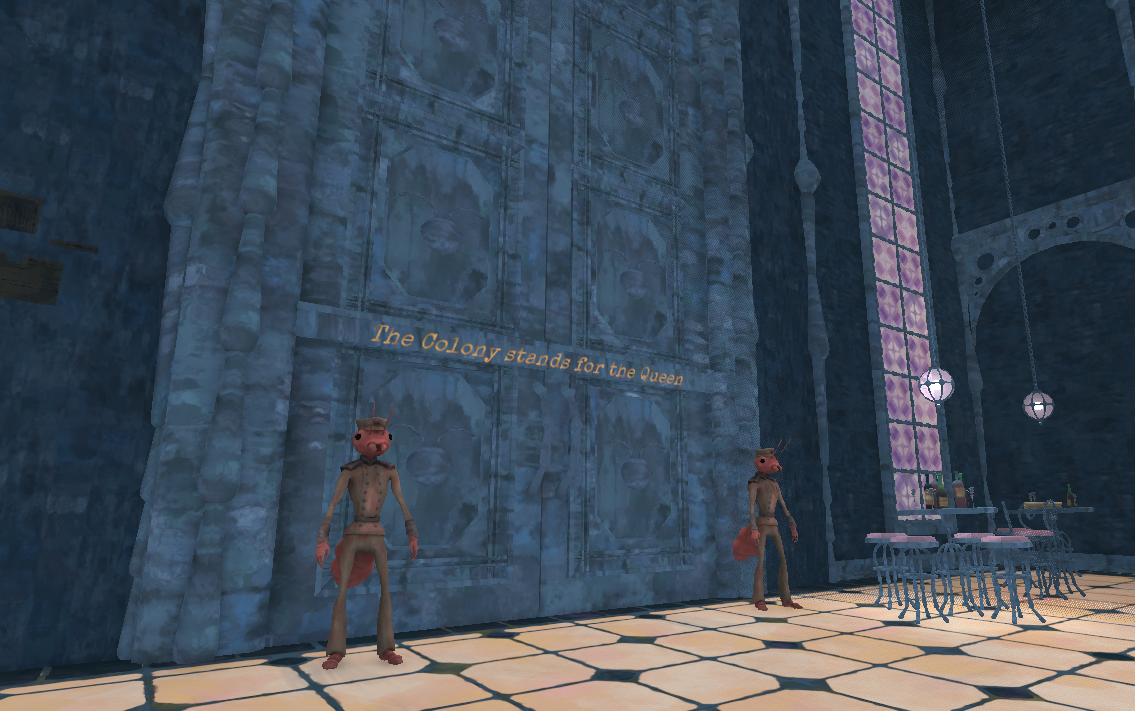
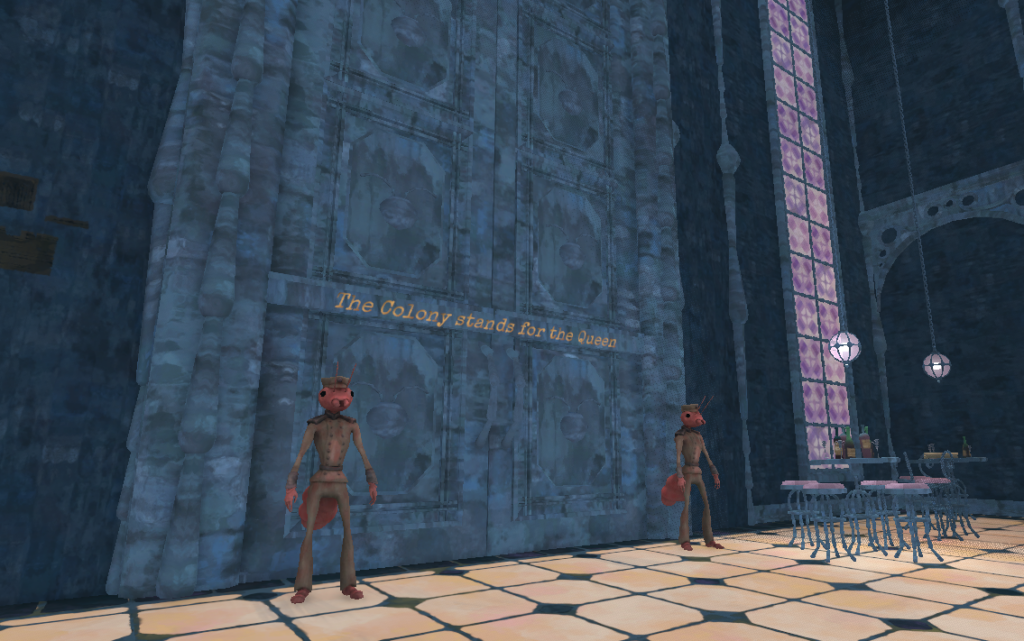
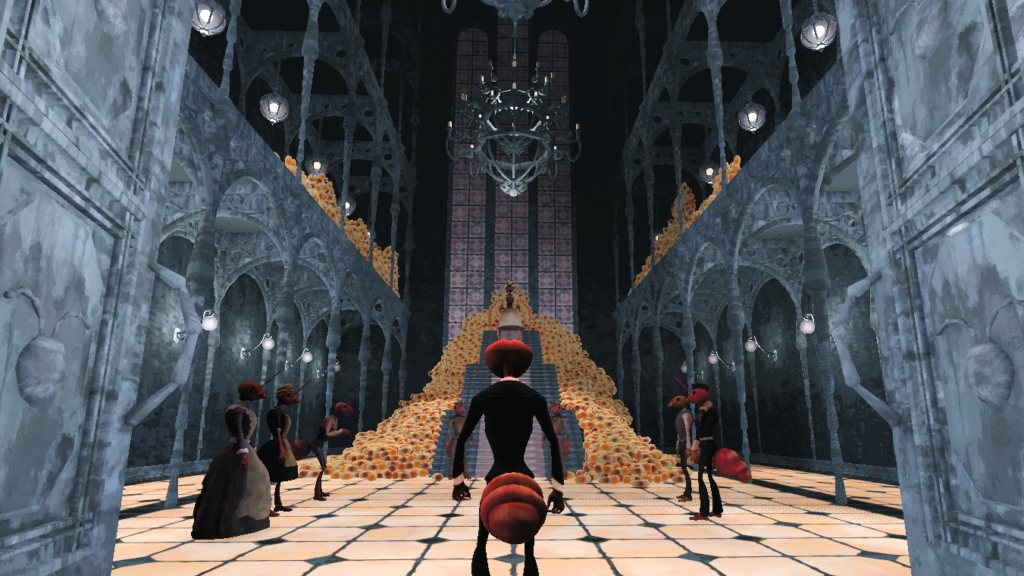
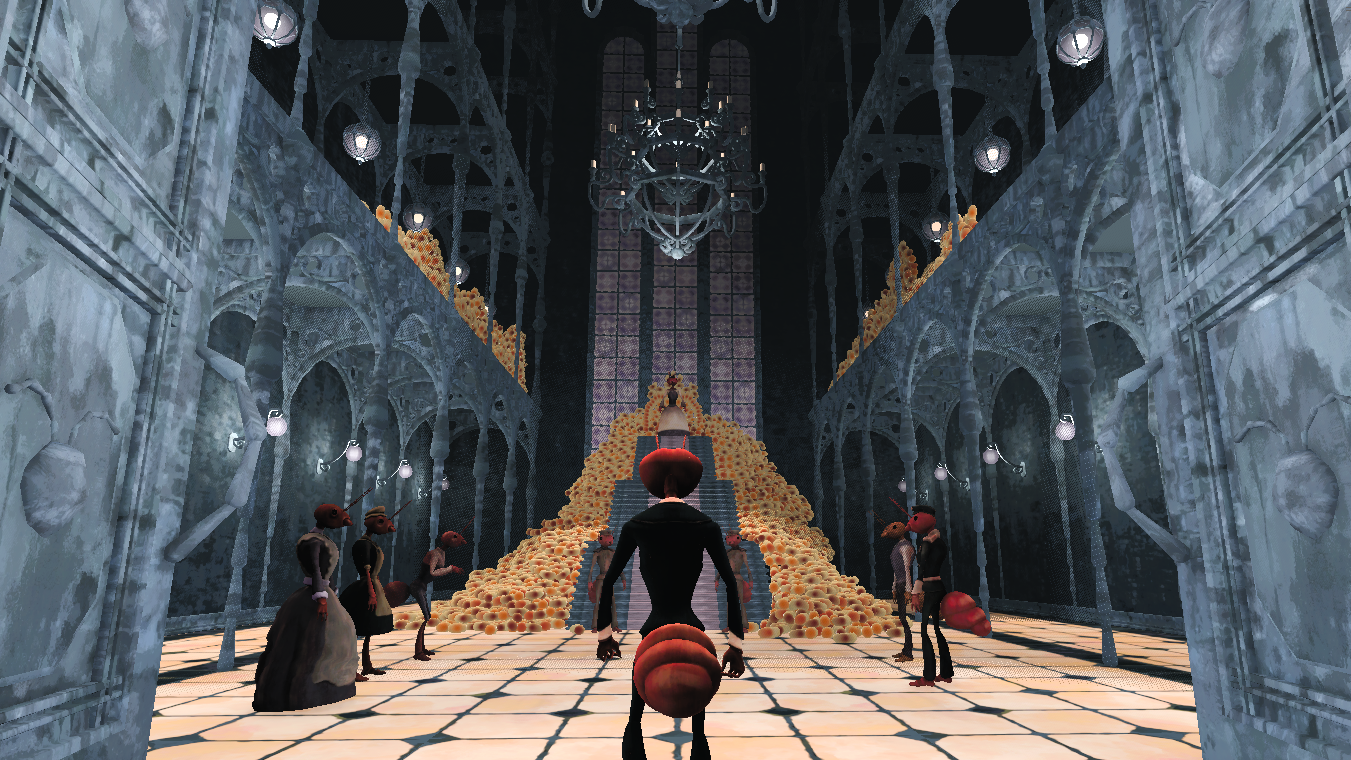
By placing the throne room behind a huge closed door and putting a sign on it that contradicts the game’s title, players get a sense for the Queen’s dishonesty.
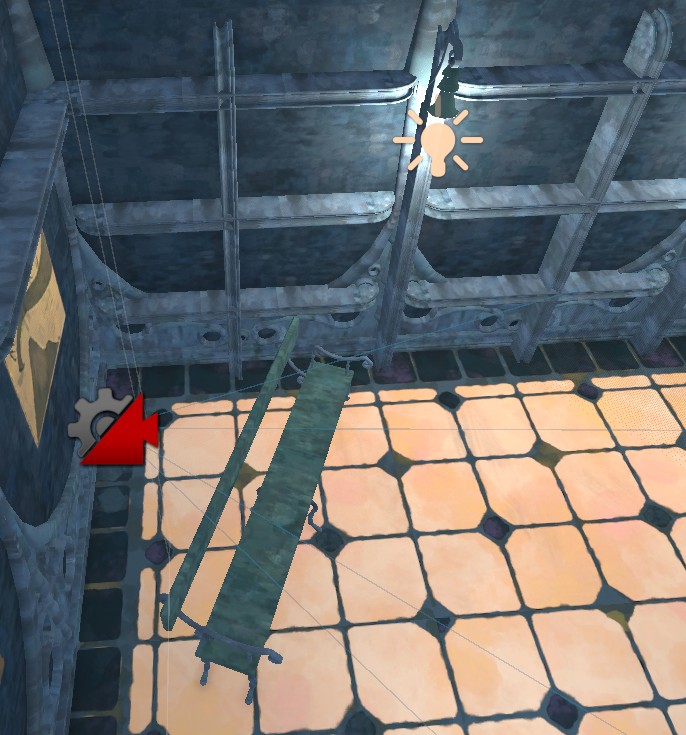
Placing cameras in corners and behind props ensured full space coverage without blind spots or accidental clipping.
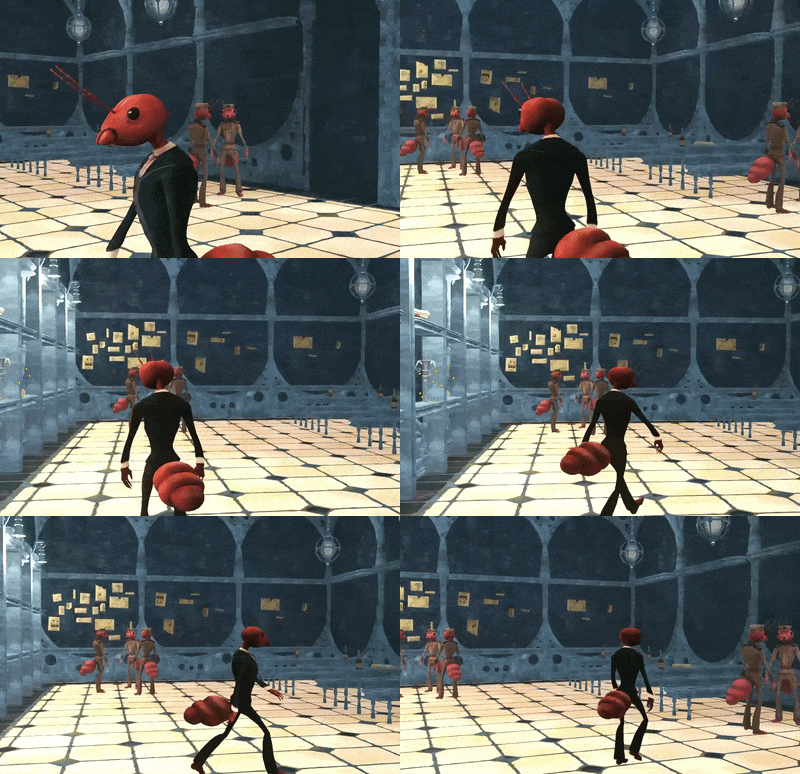
Visual Direction
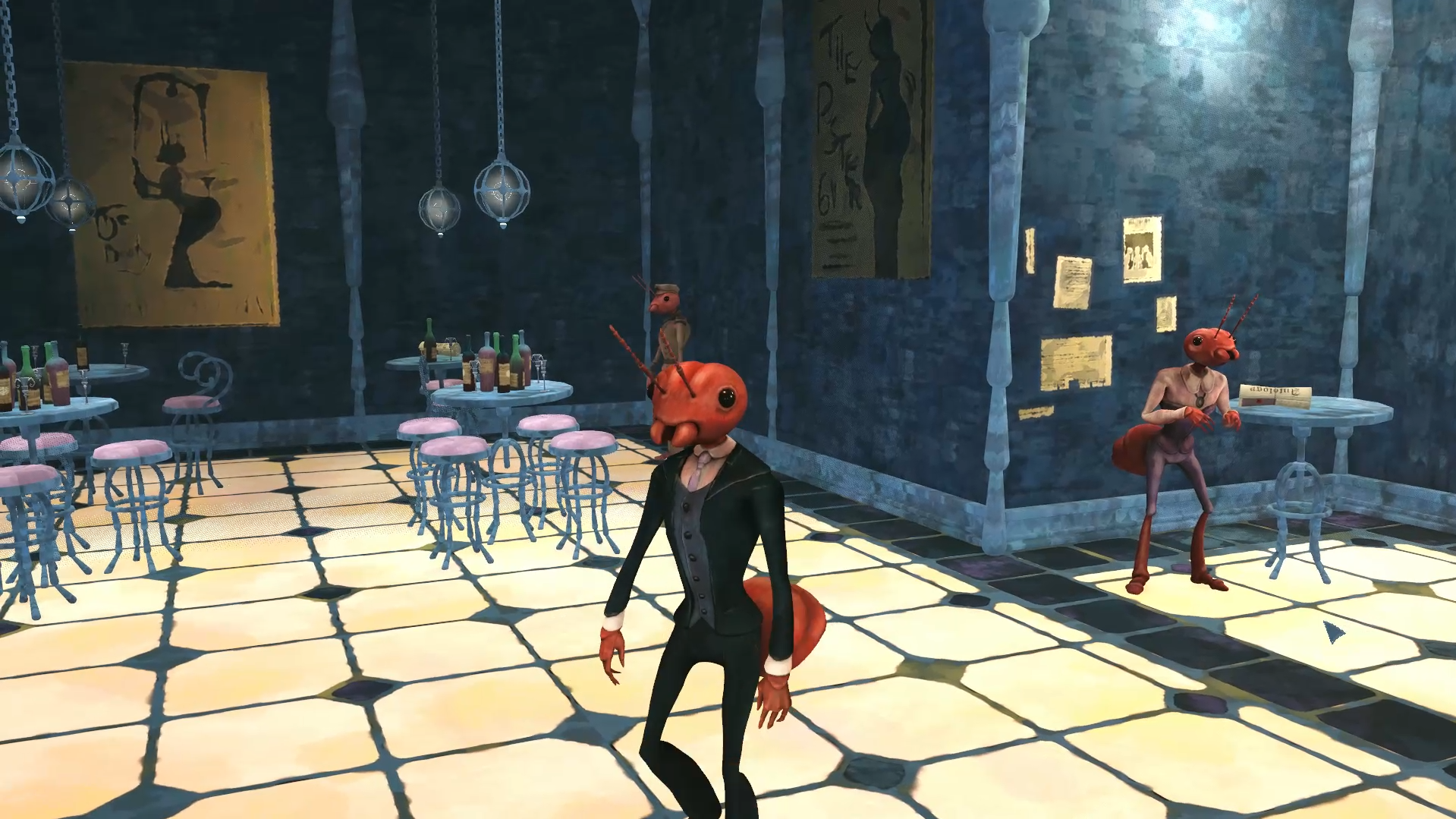
My visual goal was a noir-inspired presentation to underline the detective story, and using expressive colours for the slightly absurd, suit-wearing ants to balance the darker tone.
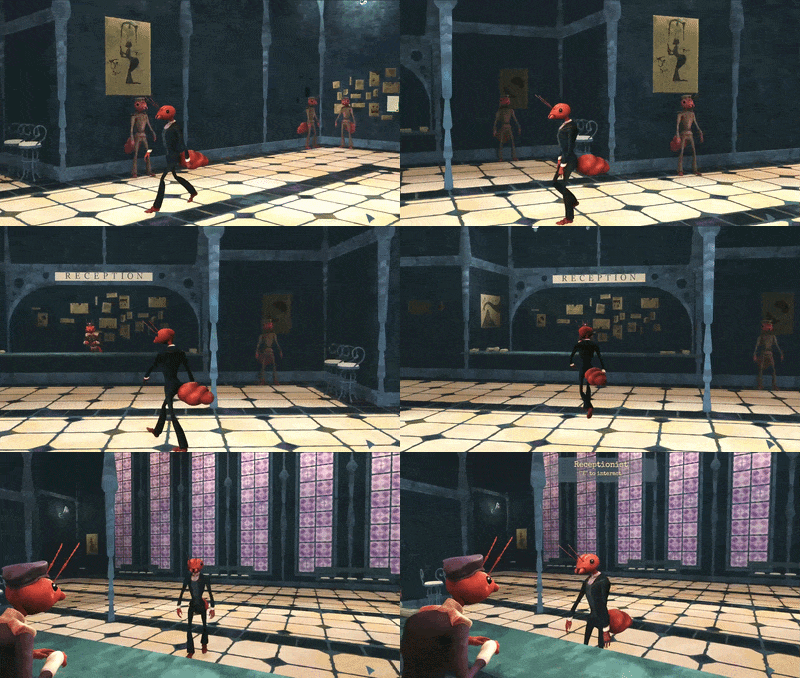
We initially used fully fixed cameras to create cinematic compositions, but this caused navigation issues and confusion in players, while it also required us designers to set up an enormous amount of camera transitions to make sure there aren’t any blindspots.
To improve this, I studied dialogue-heavy games by Telltale Games and Supermassive Games. I noticed that their cameras also have fixed positions, but their rotation is following player movement. The cameras are often placed slightly out of bounds to maintain framing and keep players from clipping through them. In many narrow spaces they only use one or two cameras to avoid disorientation.
Based on this, I redesigned the system. Our cameras remain fixed in position but rotate to follow the player, and each space uses fewer, more deliberate camera angles.
This improved clarity, reduced design complications, and maintained the cinematic feel I was going for.
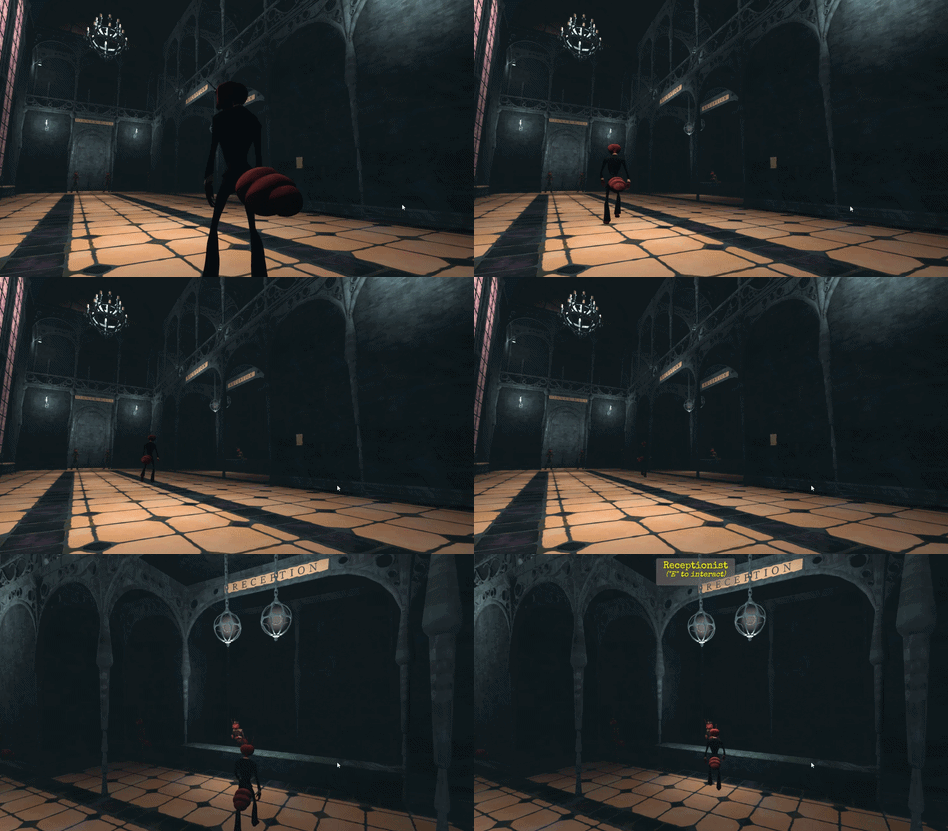
The original fixed camera system (above) and the reworked player-tracking system (below).
What would I improve?
With more time, I would focus on improving clarity and player guidance.
The evidence notebook is present in the game, but isn’t integrated into the core loop. I would expand it into a stronger system that better communicates what the player has learned and how it connects to the big picture.
I would also introduce an objective tracker and improve tutorialization to help players understand the game mechanics earlier.