The Drowning Village  |  2026

Summary

The Drowning Village is a first-person survival horror level set in an isolated fishing village, inspired by recent games of the Resident Evil series.

I designed the level from concept to playable blockout, focusing on controlled player progression, pacing, combat encounters and player guidance.

Project Details

Duration: 3 weeks
Engine: Unreal Engine 5.7

Assets Used:
Resident Horror Template V1
Blockout Tools Plugin
Free Prop Bundle
Low Poly Nature: Essentials

Level Design Process

Research & Pre-Production
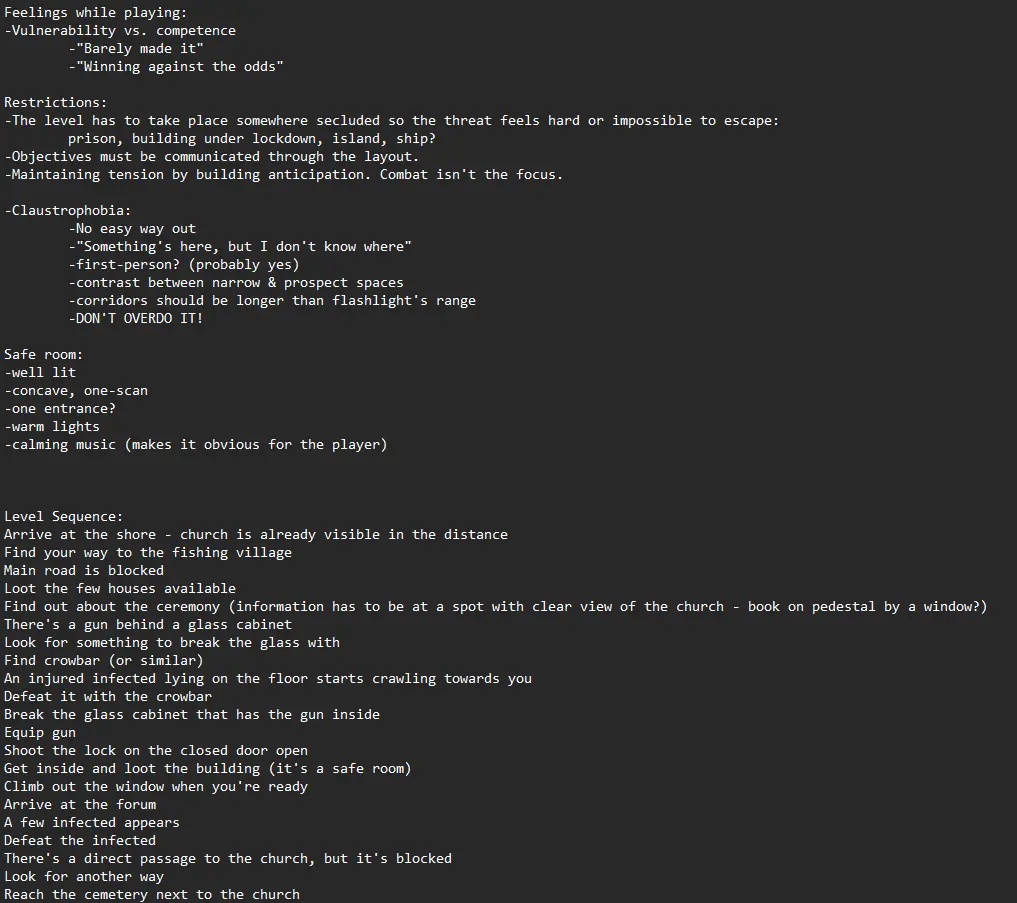
I started the project by analysing survival horror games to better understand how they keep up player interest and create tension without relying on constant combat.
My main findings were:
  • Perceived lack of resources creates vulnerability,
  • Backtracking is often used, but always combined with surprises or previously unavailable alternate paths,
  • New enemies are introduced in intentionally directed ways.
  • Tension is created by building anticipation and delivering on it unexpectedly.

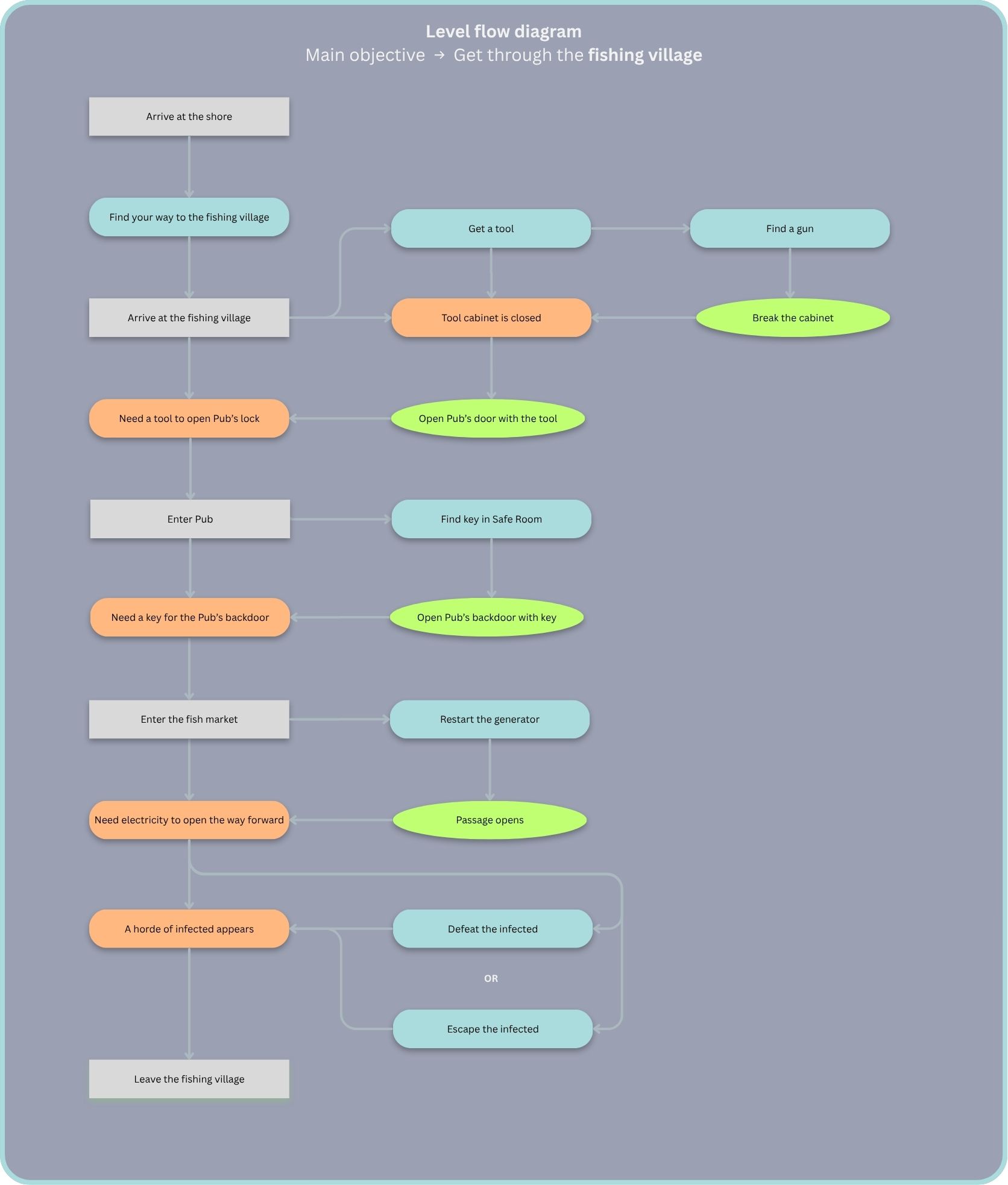
After the research, I took notes of what I already knew of the level, and defined the main gameplay sequence.

Gathering References

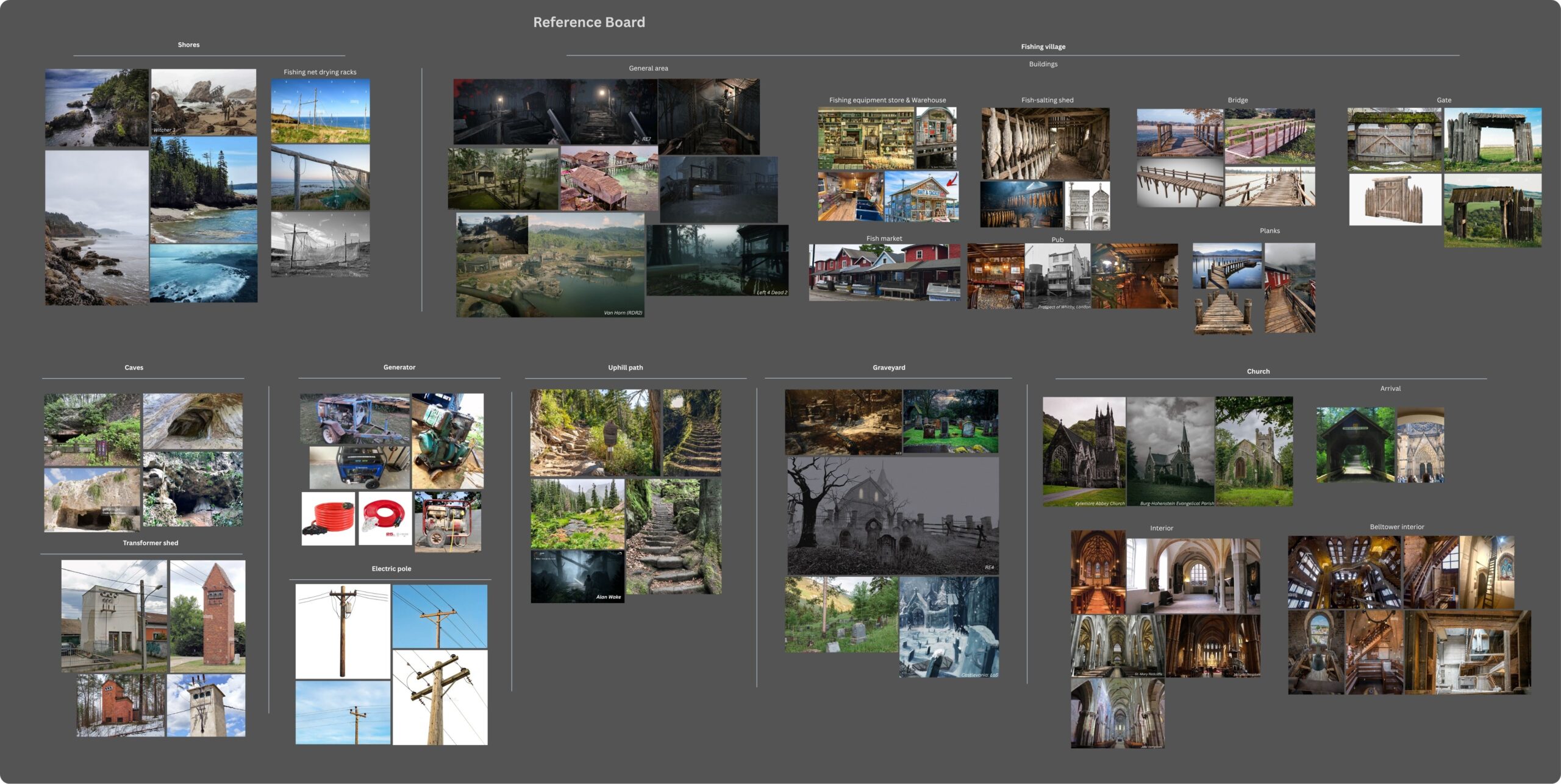
I researched traditional fishing villages and the utilities they needed and put together a visual reference board which was also useful for learning the shape language of similar locations.

I also considered the function of each building. Deciding on places such as the fish market or the local pub allowed me to design with context in mind, and later helped making parts of the level more memorable.

Concepting

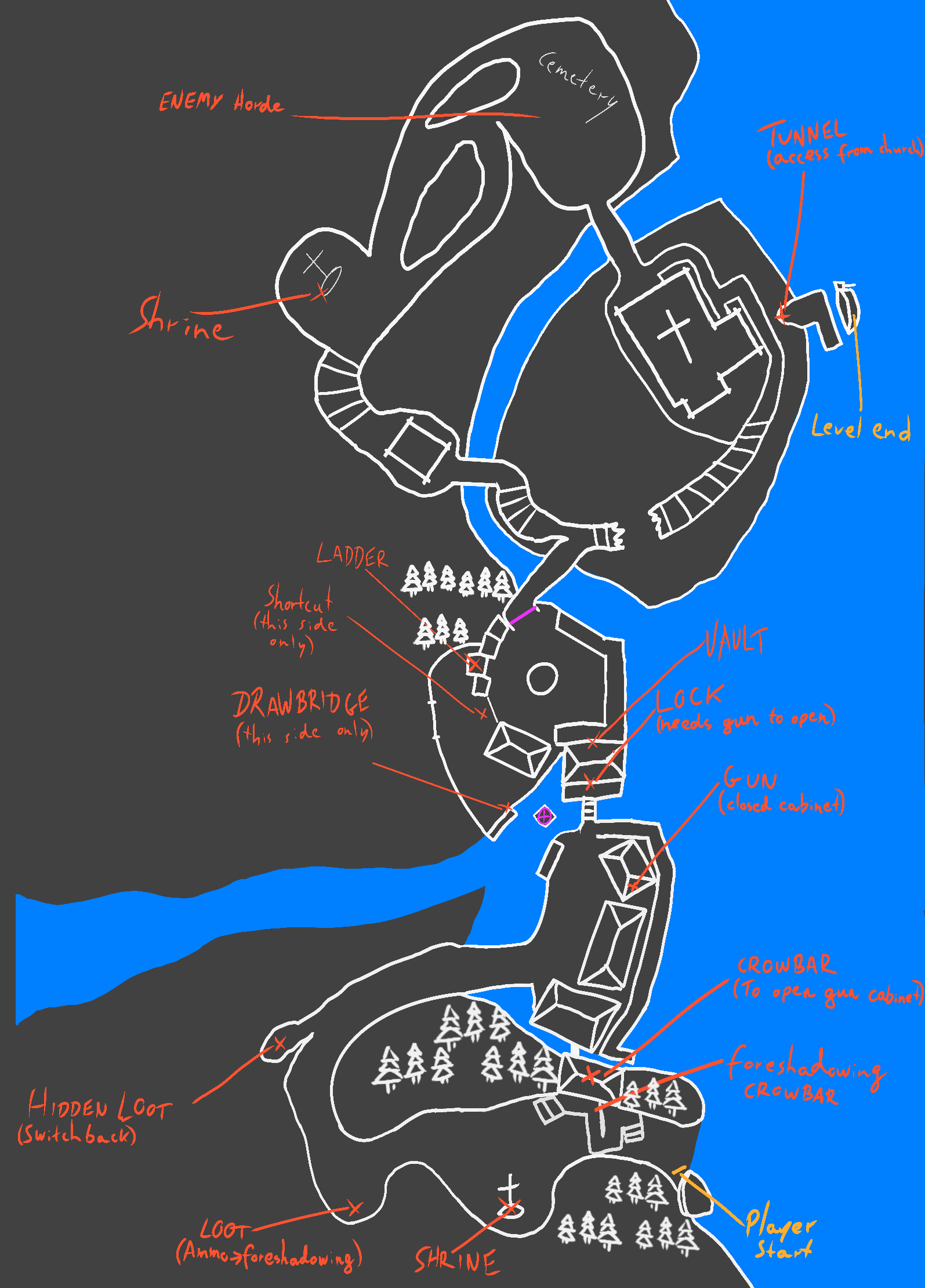
As a next step, I analyzed the village area of Resident Evil 8  to understand how it controls access to different parts of the level as the player acquires key items. This analysis informed my design decisions as I developed the level flow and created sketches of the top-down plan.

Blockout

I began blocking out the level with simple primitives and focused on basic gameplay with no regard to visual detail or atmosphere just yet. It allowed me to identify problems quickly and make iterations with relatively low time cost.

The first blockout already allowed me to test:

  • Player metrics (doorway size, step height, etc.),
  • Traversal distances,
  • Sightlines,
  • Landmark visibility,
  • Area connections,
  • Size of combat spaces.

Player Guidance

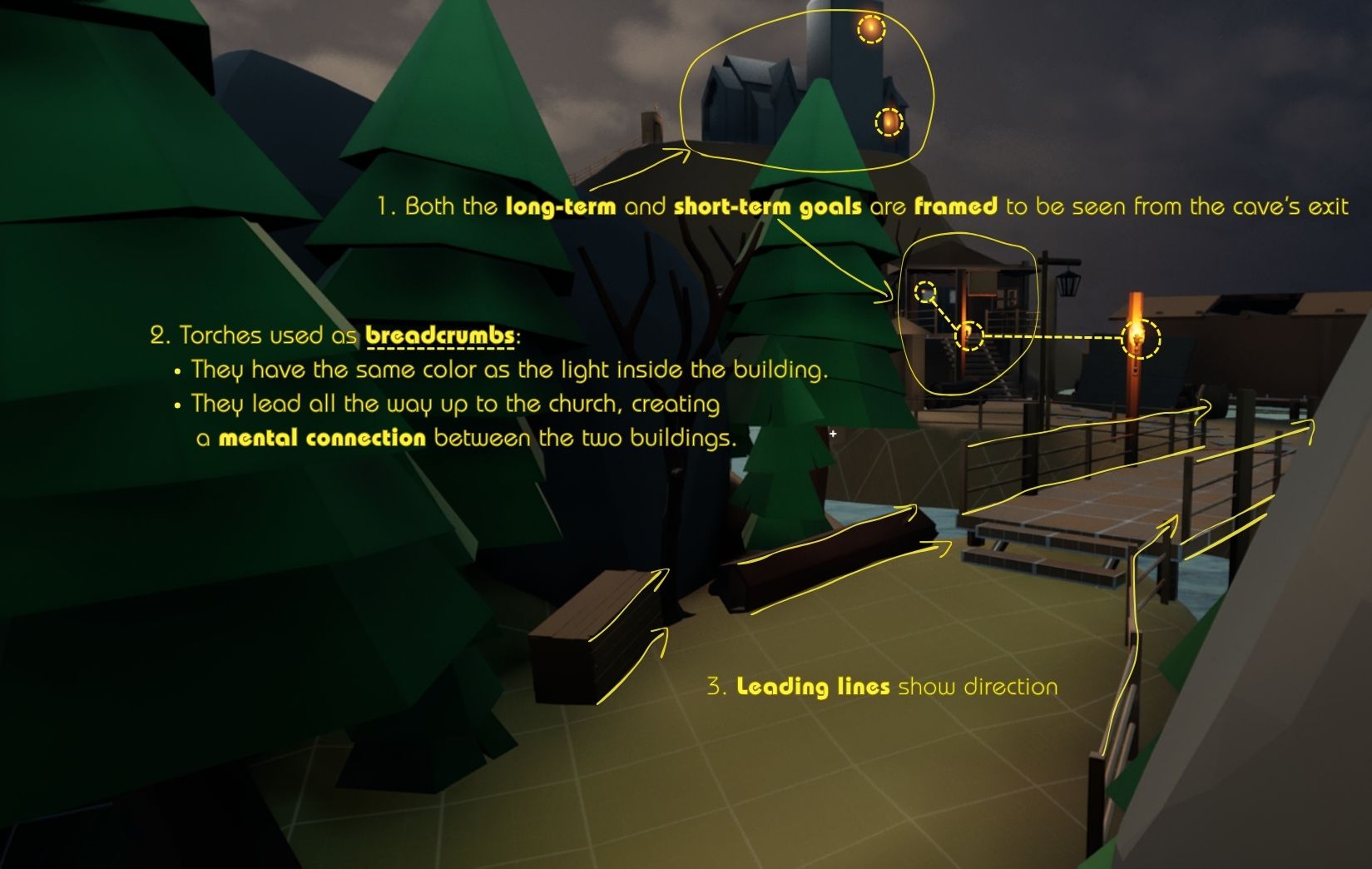
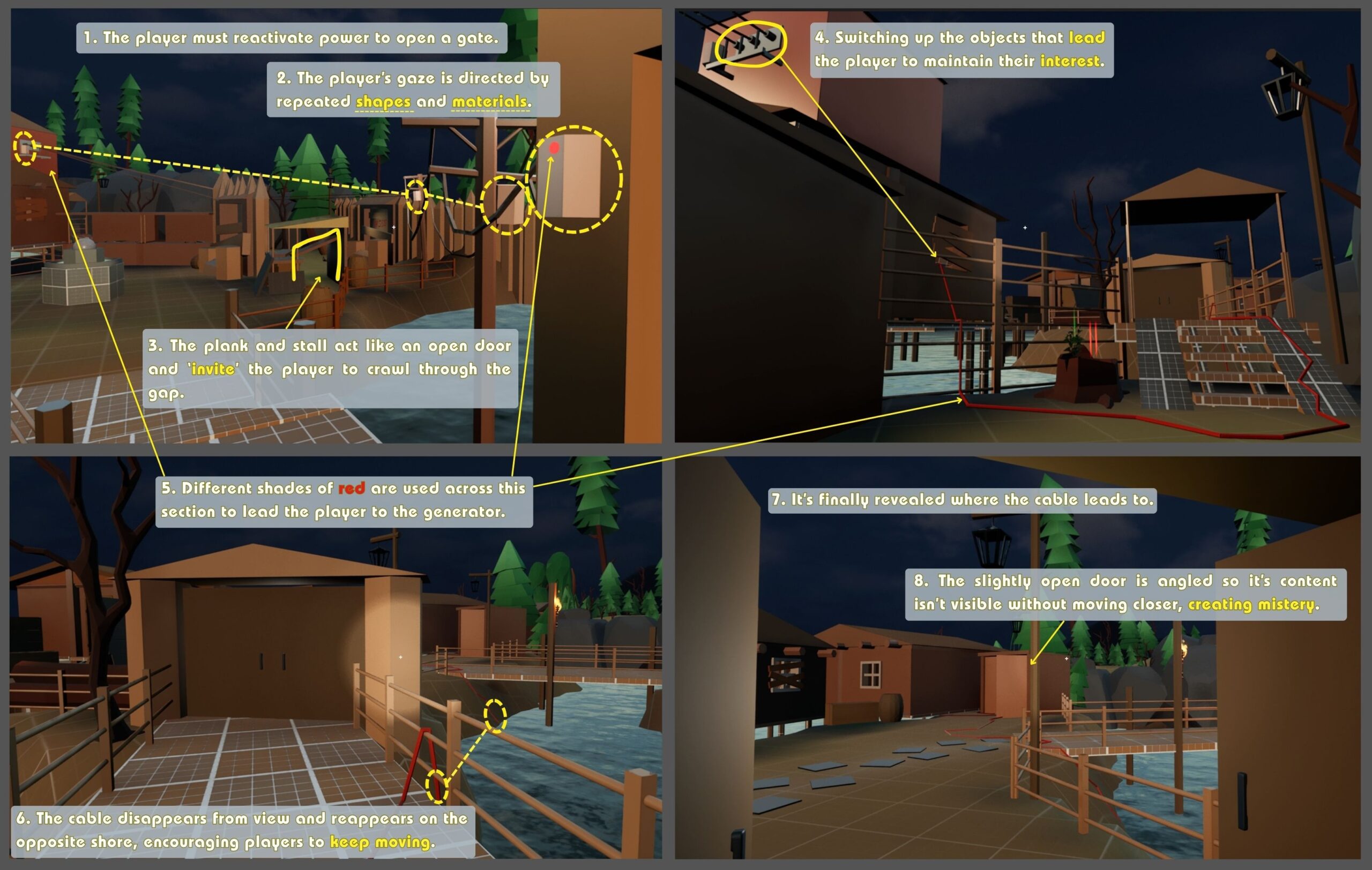
Next, I focused on how the player would understand where to go without relying on markers or a map.

I used level design tools such as landmarks, framing, symbols, sightlines, lighting, breadcrumbing, color coding and more to guide the player through the level and help them create a mental map of it.

I also used bait & switching to make traversal more interesting: funneling the player to an obvious goal, only to find the way forward closed, and upon turning back, having the new perspective reveal an alternate path (see below).

Encounter Design

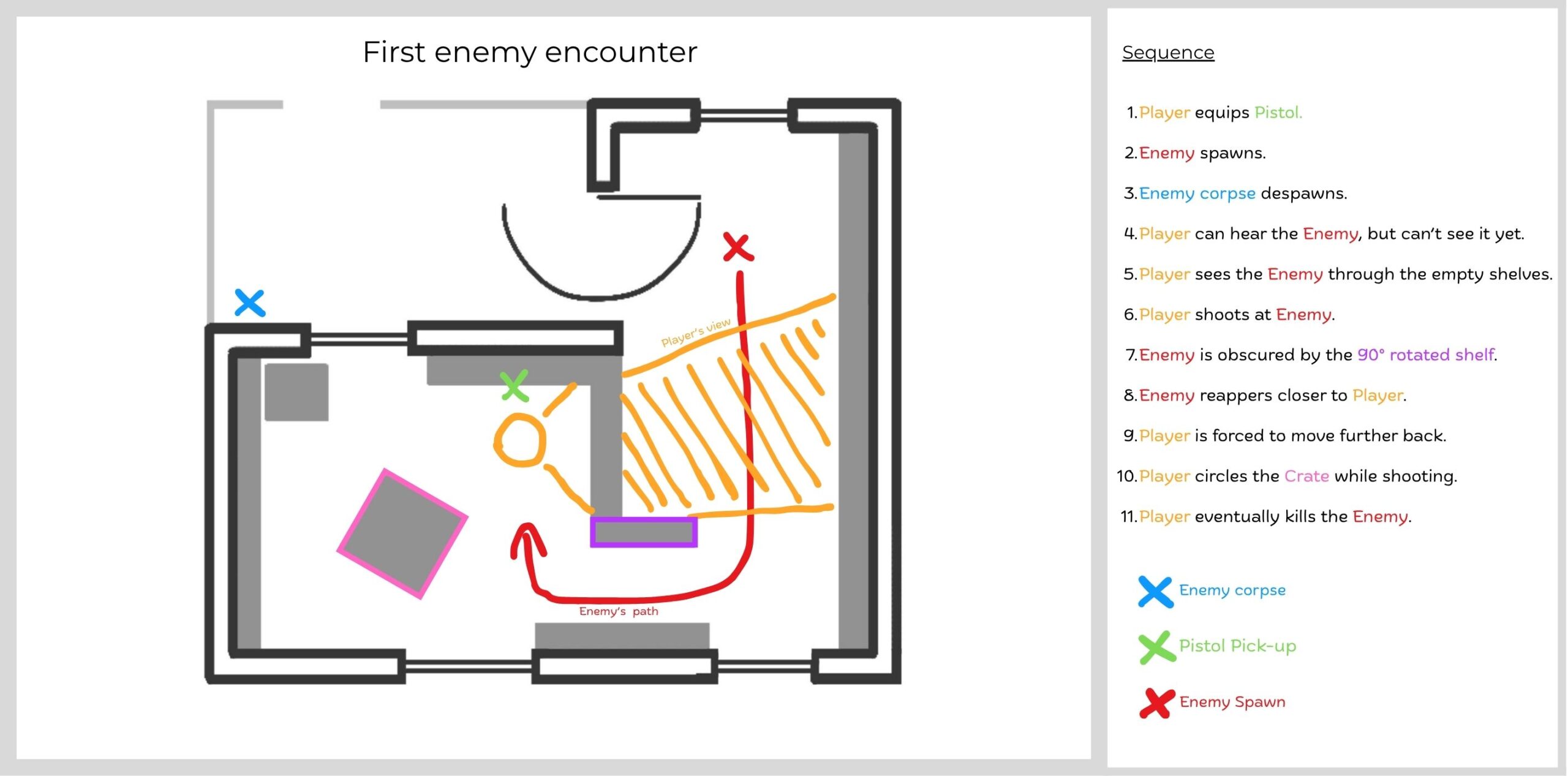
The first combat encounter is designed to feel tense but fair. The enemy initially blocks the only exit, while the shelves temporary hide its movement and allow it to reappear closer to the player.

Despite creating the feeling of being trapped, this encounter favours the player:

  • The shelves provide a safe opportunity to learn the properties of the pistol without taking any damage,
  • The central crates allow the player to circle the melee-only enemy.

The cramped layout forbids the player from distancing themselves from the threat, so the encounter still feels close and personal, supporting my goal of creating a tense but fair first encounter.

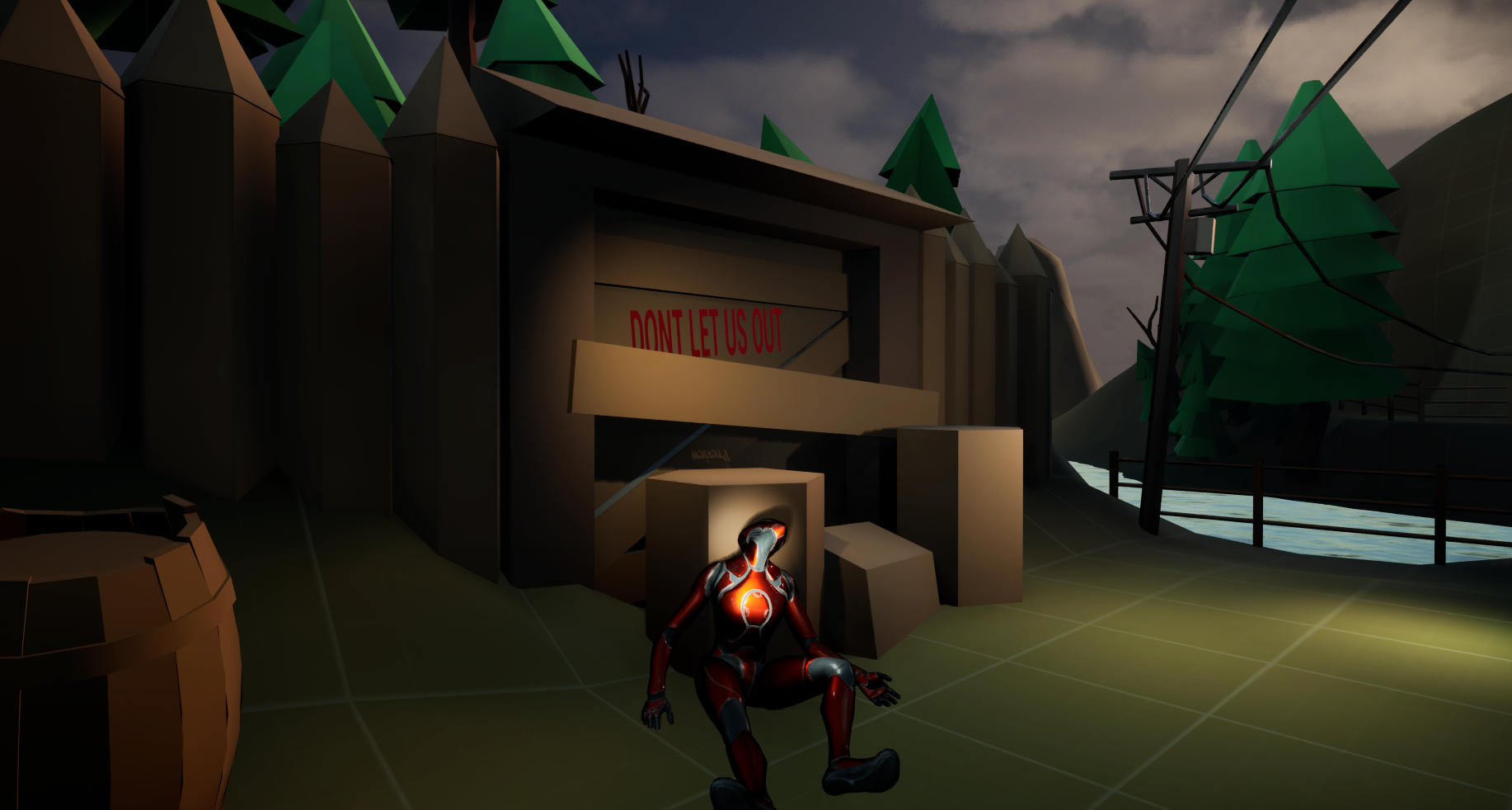
Environmental Storytelling